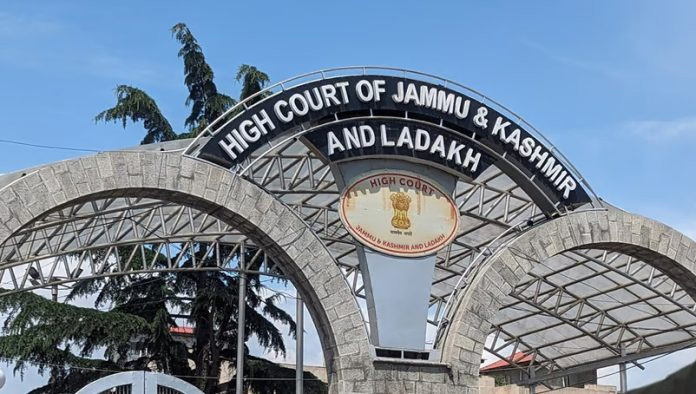
In a significant judgment reaffirming the fundamental right to speedy justice, the High Court of Jammu and Kashmir and Ladakh has granted bail to a man accused of murdering his wife, observing that prolonged incarceration without conclusion of trial cannot be justified merely on account of the gravity of the offence.
Justice Mohd Yousuf Wani, while allowing the successive bail application of Hamid Hussain, a resident of Thathri in Doda district, took serious note of the prolonged trial, observing that despite the passage of more than a decade, the prosecution had examined only 23 out of 50 listed witnesses, leaving more than 25 witnesses yet to be examined.
The petitioner had been in custody since April 29, 2016, in connection with FIR No. 19/2016 registered at Police Station Thathri, Doda, under Sections 302 and 109 of the Ranbir Penal Code (RPC).
According to the prosecution, the accused allegedly murdered his wife by pressing her neck and subsequently setting her ablaze after pouring kerosene oil over her. Following investigation, a chargesheet was presented before the trial court, which framed charges against the accused and other co-accused on February 22, 2017.
However, the trial failed to make substantial progress despite the passage of several years. The court noticed that when the earlier bail application was rejected by the trial court on December 17, 2024, only 19 prosecution witnesses had been examined.
Appearing for the petitioner, Advocate S A Hashmi vehemently argued that continued incarceration for such an extraordinarily long period without conclusion of trial amounted to a violation of Article 21 of the Constitution of India, which guarantees the right to life and personal liberty, including the right to a speedy trial.
Opposing the application, Government Advocate Adarsh Bhagat submitted that the petitioner was facing a heinous charge of murdering his wife, punishable with death or imprisonment for life. He argued that releasing the accused could adversely affect the prosecution case, as several witnesses were yet to be examined.
After considering the rival submissions and examining the trial record, Justice Wani observed that the prosecution evidence recorded so far was circumstantial in nature, while refraining from commenting upon its merits to avoid prejudicing the pending trial.
The court referred to the settled principles laid down by the Supreme Court that deprivation of personal liberty without ensuring a speedy trial is inconsistent with Article 21 and that undertrial prisoners cannot be subjected to indefinite detention when the trial is unlikely to conclude within a reasonable period.
The High Court further noted that the co-accused had already been enlarged on bail and that considerable time would be required to examine the remaining prosecution witnesses.
Taking into consideration the prolonged incarceration, slow progress of trial and constitutional protection of personal liberty, the Court held that the ends of justice would be served by granting bail to the petitioner subject to stringent conditions.
Accordingly, the High Court allowed the bail application and directed the release of Hamid Hussain upon furnishing personal and surety bonds of Rs 2 lakh each to the satisfaction of the designated authorities.
About the Author


