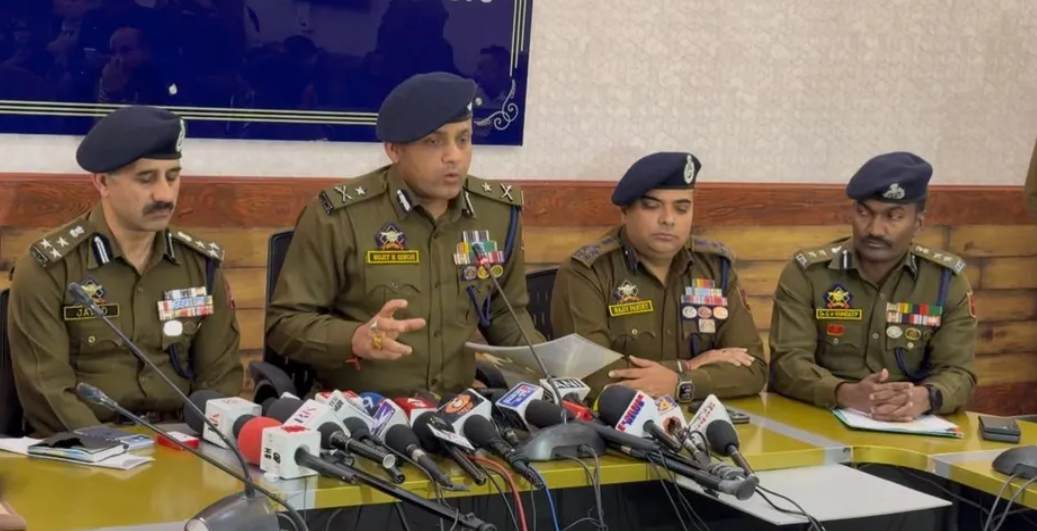
More than 1,500 cases under the Narcotic Drugs and Psychotropic Substances (NDPS) Act have been registered across Kashmir this year, with nearly 2,000 people arrested as part of the ongoing crackdown on drug trafficking, Inspector General of Police (IGP) Kashmir Sujit Kumar said on Thursday.
Addressing his first media interaction after taking charge at the Police Control Room in Srinagar, the IGP said police were intensifying action against drug networks, targeting not only drug peddlers but also their financial channels and associates.
He revealed that around Rs 1.10 crore in cash had been recovered in drug-related cases, while properties worth crores of rupees linked to narcotics trafficking had been attached. Additionally, 567 bank accounts involving approximately Rs 1.31 crore had been frozen.
Appealing to young people to join the fight against drug abuse, Kumar urged them to share information about drug trafficking and assured that the identities of informants would remain confidential.
“Police are with you,” he said, encouraging young people to come forward and help build a drug-free society. He also advised individuals struggling with addiction to seek assistance from the police or rehabilitation centres.
On cybercrime, the IGP warned youngsters against becoming involved in organised online fraud networks, particularly through the misuse of bank accounts, commonly known as mule accounts.
He said recent cybercrime complaints involved financial losses exceeding Rs 54 crore. Police have recovered approximately 13–14 per cent of the defrauded amount and returned more than Rs 7 crore to victims.
Kumar cautioned people against allowing their bank accounts to be used for transferring money obtained through online fraud, warning that those facilitating such transactions could also face legal action.
The IGP also expressed concern over rash driving and reckless biking, particularly among youngsters, and urged them to follow traffic rules and adopt responsible behaviour on the roads.
He said police want young people to become active partners in maintaining public safety and addressing major social challenges, including drug abuse, cybercrime and traffic violations.
About the Author


